
Welcome, runner!
Everything you need to train, prepare and recover for the Aberdeen Half Marathon — brought to you by SPEAR Physiotherapy.
👋 Who are we?
Meet the SPEAR team — the runners, physios and performance specialists behind your Aberdeen Half support.
 ▶ Watch on YouTube
Founded by Aberdeen runner Myles Edwards and Kenyan athlete Gideon Gathimba, GEF supports vulnerable children and families in Kenya — through education, housing, food security and sport. When you toe the start line in July, you're running for them too.
Stay connected
Race Day Checklist
Tap each item to tick it off. Your progress is saved during this session.
- ✓Lay out kit, shoes, bib and safety pins
- ✓Pin the race number to your top (front, four corners)
- ✓Charge GPS watch and headphones (if allowed)
- ✓Pre-load breakfast ingredients (tried & tested)
- ✓Set two alarms and plan journey to the start
- ✓Hydrate well — aim for pale yellow urine
- ✓Running shoes (broken-in, not brand new)
- ✓Technical socks — never cotton
- ✓Shorts/tights and technical top
- ✓Sports bra (if applicable)
- ✓Hat/buff and sunglasses or light rain jacket
- ✓Anti-chafe (nipples, inner thighs, sports bra line)
- ✓Race number and timing chip
- ✓GPS watch & charger
- ✓2–3 gels / fuel you've trained with
- ✓Water bottle (500ml)
- ✓Warm layer and dry kit for afterwards
- ✓Towel, flip-flops, plasters, toilet roll
- ✓Phone + £10 cash
- ✓Snack/banana for post-race
- ✓Breakfast 2–3 hours before (oats/toast/banana)
- ✓Sip 300–500ml of water/electrolytes
- ✓Arrive 60+ minutes before the start
- ✓Bag drop done early — avoid last-minute stress
- ✓Dynamic warm-up (see Mobility Video)
- ✓Smile, breathe, enjoy it — you're ready!
Key Dates
📣 Official race hub
For entries, wave times, start-pack collection, road closures, bag drop, water stations, results and any last-minute changes, always go to the official site:
aberdeenmarathon.org🏁 Race Day
Saturday 18 July 2026
Aberdeen Half Marathon — check your start-pack email and aberdeenmarathon.org for wave times.
🎤 GEF & Organisers Guest Panel
Sunday 14 June 2026
Join the GEF and race organisers for a live guest panel covering training, injury prevention and race-day preparation. Time & venue to follow — keep an eye on our socials and mailing list for confirmation.
📆 Suggested training milestones
Work backwards from race day (18 July 2026):
- 12 weeks out — 25 April 2026: begin structured plan
- 8 weeks out — 23 May 2026: first 10-mile long run
- 3 weeks out — 27 June 2026: peak long run (11–12 miles)
- Taper begins — 4 July 2026: reduce volume, keep intensity
- Race day — 18 July 2026 🎉
Half Marathon Training Plans
Three 12-week programmes. Choose the one that matches your current running volume. Always listen to your body — if in doubt, book a physio assessment.
🌱 Beginner — "Finish strong"
For: Runners who can currently comfortably run 3–4 km. Goal is to finish the half marathon feeling great.
Structure: 3 runs + 1–2 cross-training sessions per week. Long run on weekends. Walk-run intervals are encouraged early on.
| Week | Tue | Thu | Sat (Long) | Total |
|---|---|---|---|---|
| 1 | 3 km easy | 3 km easy + strides | 4 km easy | 10 km |
| 2 | 3 km easy | 4 km easy | 5 km easy | 12 km |
| 3 | 4 km easy | 4 km easy | 6 km | 14 km |
| 4 (cutback) | 3 km easy | 3 km easy | 5 km | 11 km |
| 5 | 4 km easy | 5 km easy | 7 km | 16 km |
| 6 | 4 km easy | 5 km easy | 8 km | 17 km |
| 7 | 5 km easy | 5 km easy | 10 km | 20 km |
| 8 (cutback) | 4 km easy | 4 km easy | 8 km | 16 km |
| 9 | 5 km easy | 6 km easy | 13 km | 24 km |
| 10 | 5 km easy | 6 km easy | 16 km | 27 km |
| 11 (taper) | 5 km easy | 5 km easy | 10 km | 20 km |
| 12 (race) | 4 km easy | 3 km + strides | 🏁 21.1 km | 28 km |
Running Mobility Videos
A curated set of mobility and strength sessions from the Physiorun team — use them as a dynamic warm-up, a standalone mobility day or a mid-week active recovery session.
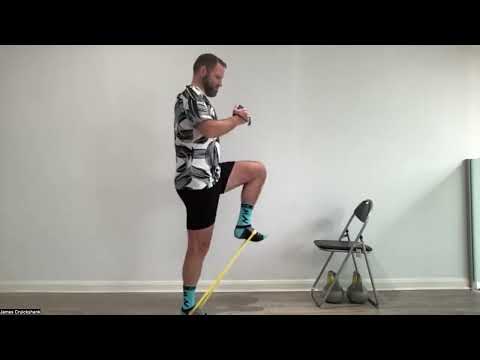
Runners Legs
A focused session to build strength and resilience through the key running muscles — quads, glutes, hamstrings and calves.
 ▶ Watch on YouTube
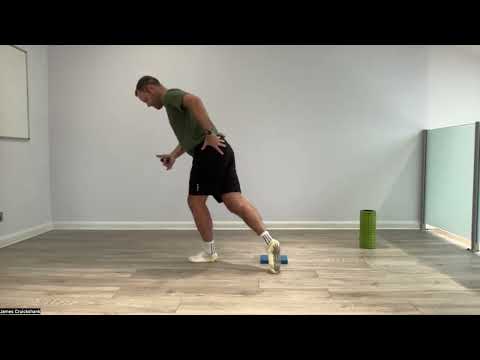
Running Repairs 101
An introduction to the self-care and mobility work that keeps runners injury-free and training consistently.
 ▶ Watch on YouTube
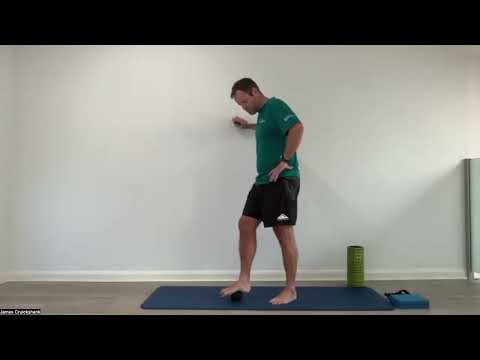
Half Marathon Mobility
A dedicated mobility session designed specifically for half marathon runners — hips, thoracic spine, ankles and the whole posterior chain.
 ▶ Watch on YouTube
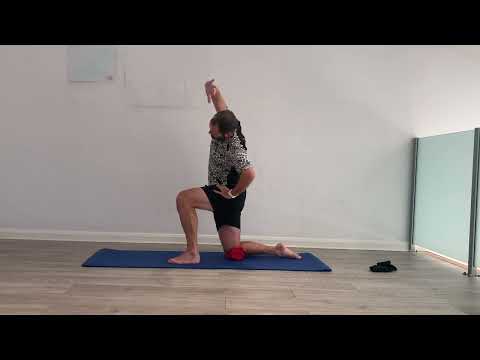
Hip Mobility
Open up tight hip flexors, glutes and rotators — essential for efficient stride length and injury-free miles on the Aberdeen course.
 ▶ Watch on YouTube
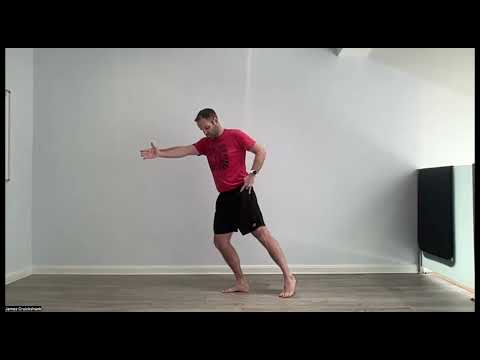
Foot Pronation
Understand how your foot strikes the ground and work through targeted drills to manage over/under-pronation and improve running mechanics.
 ▶ Watch on YouTube
Enjoying these sessions?
Join the Physiorun weekly classroom — fresh, live-streamed mobility, strength and rehab classes every week, with replays you can do anytime.
Join the weekly classroom →The Route
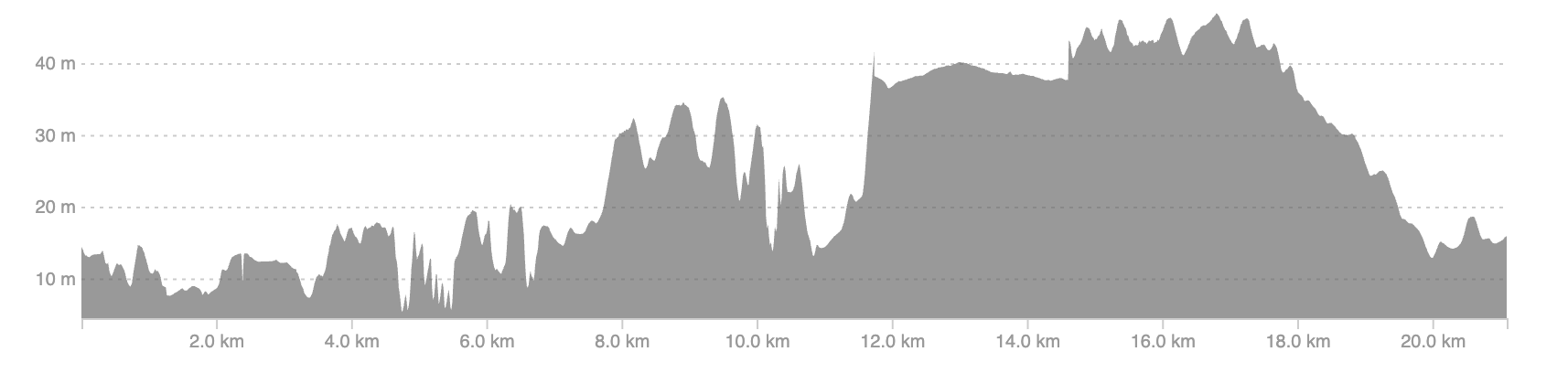
The course
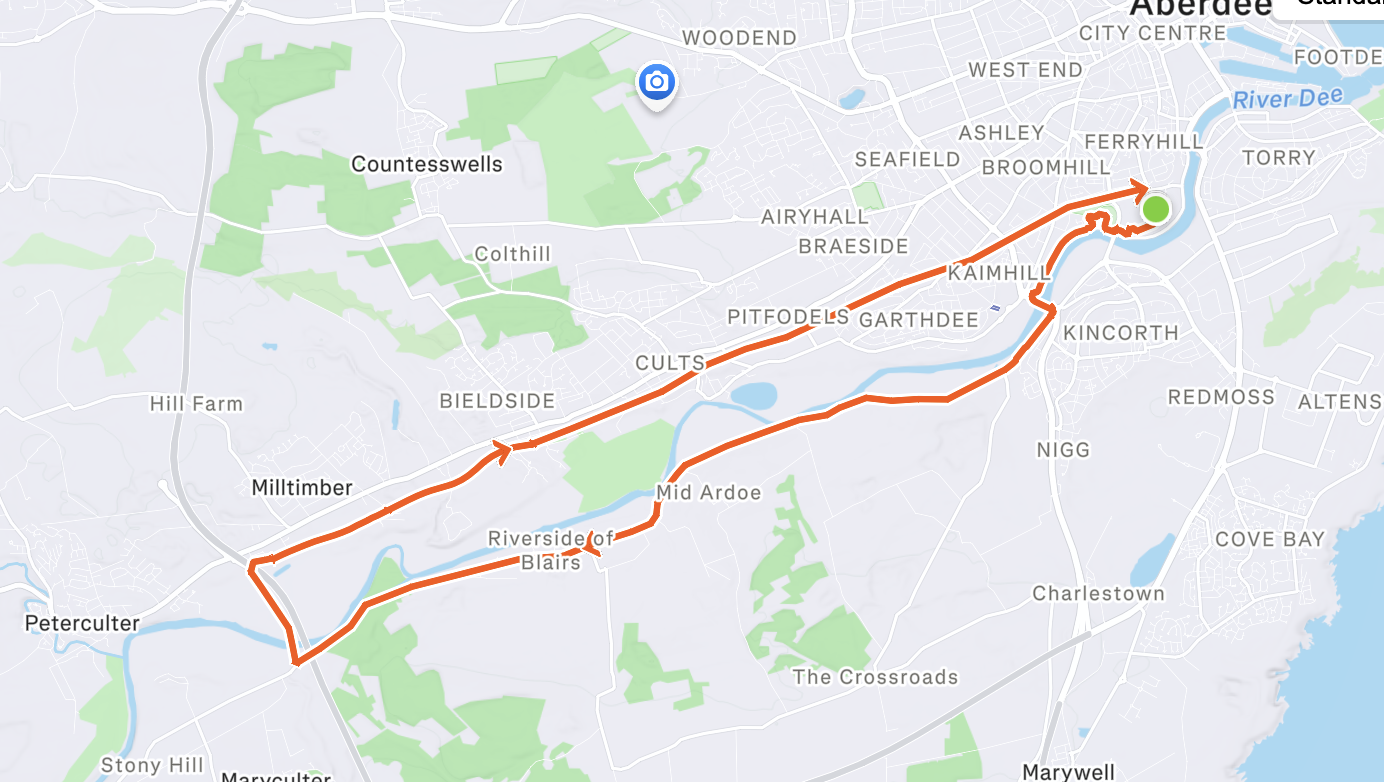
Starting in the heart of Aberdeen at the iconic Duthie Park, runners will follow the twisting silver trail of the River Dee, taking in fast, scenic miles along Riverside Drive and across the Bridge of Dee. From there, the route sweeps onto South Deeside Road before joining the historic Deeside Way — the old route once used by the Royal Family on their journeys to Balmoral Castle. With river views, rich local history, and a stunning finish back at Duthie Park, this is a route built to inspire from first step to final stride.
Key landmarks you'll run through
- Start / finish: Duthie Park
- Riverside Drive & Bridge of Dee
- South Deeside Road
- Cults, Bieldside & Milltimber
- Deeside Way — the royal route home
Course links & files
SPEAR Strava Group
Join the Aberdeen Half club on Strava — share routes, cheer each other on and keep motivated through training.
Open Strava GroupRunner's Mini MOT
Why take a Runner's Mini MOT?
Combining the Countermovement Jump (CMJ), Hop Test on VALD force plates, and Quad & Hamstring Dynamometer tests gives us a clear, objective picture of your lower-limb strength, power output and left/right symmetry. Together, these results tell us exactly which areas need addressing to improve running performance and reduce your risk of injury — so your training is targeted, not guessed.
You'll leave with your numbers, an easy-to-understand explanation of what they mean for you as a runner, and a personalised plan to take into your next training block.
Phone bookings only at present — our reception team will find a slot that suits.
What to do if you're injured
Don't ignore it, don't Google it forever, and don't train through it. A running niggle caught early is almost always a small detour — left too long, it becomes a big one.
Step 1 — Stop aggravating it
Reduce or pause the runs that are making it worse. Cross-train (cycle, swim, row) to maintain fitness without the impact.
Step 2 — Book in with a physio
Contact our team — we'll triage you, give you a clear diagnosis, and build you a recovery & return-to-running plan tailored to the Aberdeen Half.
Step 3 — Get a plan & get back to training
Our plans are specific, progressive and evidence-based. No vague "rest for 2 weeks" advice — just a clear path back to the start line.
Get help now
Prefer to talk? Call 01224 900102 or email hello@spearphysiotherapy.co.uk.
Read up on common running injuries
Our blog on the top 5 running injuries covers runner's knee, Achilles tendinopathy, ITB syndrome, plantar fasciopathy and shin splints — with first-line self-help for each.
Read the injuries guide →Book an Appointment
Niggle? Full-blown injury? Pre-race check-up? Our chartered physios are runners too — and we know the Aberdeen course inside out. Get in touch three ways:
Our friendly reception team will help you find the right appointment — whether that's a runner's MOT, sports massage, physio assessment or a VALD performance screen.
Out & Back Running Shop
Aberdeen's dedicated running shop — expert gait analysis, the best brands and friendly advice from people who actually run.
Visit outandbackstore.comFree Physiorun App
More blogs, programmes and expert video content — the Physiorun app is free and packed with runner-specific rehab, strength and mobility.
Download PhysiorunJoin the SPEAR Mailing List
Monthly tips, event updates and free webinars — no spam, just content that helps you run stronger.
✉️ Sign up to the mailing listOpens a secure sign-up form on our mailing list provider. Unsubscribe any time.
Contact Us
Got a question about training, the race or an injury? Send us a message and our team will get back to you within 1–2 working days.
Prefer email? Write to us directly at hello@spearphysiotherapy.co.uk.
Blog Library
Race-Day Nutrition
NutritionRace dayWhat you eat in the 24 hours before (and during) a half marathon can be the difference between a glorious PB and a painful death-march. Here's the SPEAR approach.
Two days out
Start topping up glycogen — think porridge, pasta, rice, potatoes, bread. Keep fibre moderate; you don't want any 'surprises' on the start line. Hydrate steadily with water and include electrolytes if the forecast is warm.
The night before
Stick to familiar carb-heavy foods you've eaten before long runs — pasta with a light tomato sauce, rice and chicken, a jacket potato. Avoid anything very spicy, creamy or unusually high in fibre/fat.
Race morning (3 hours out)
Aim for 1–2 g of carbohydrate per kg of bodyweight. Classic winners: porridge with banana and honey, bagel with jam, white toast with peanut butter. Sip 400–500 ml of water/electrolytes.
30 minutes before
A banana or a gel with some water if you feel you need it. Don't try anything new.
During the race
For a half, most runners benefit from 30–60 g of carbs per hour once past 45 minutes. That's typically 1 gel every 30–40 minutes, washed down with water. Use the gels/drink you have trained with — race day is not the day to experiment.
After
Within 30 minutes: protein + carbs (chocolate milk, a recovery shake, a bagel with chicken). Rehydrate with electrolytes. And yes — you've earned the post-race cake.
The Best Running Routes in Aberdeen
LocalRoutesAberdeen has a quietly brilliant running scene. Here are six routes SPEAR physios and patients rave about — from beach flats to granite-hill grinds.
1. The Beach Esplanade — flat & fast
The go-to for tempo work. 4 km of uninterrupted pavement each way, usually with a headwind in one direction (pick your poison).
2. Deeside Way — forever trails
Old railway line from Duthie Park all the way to Ballater. Gentle gradient, well-maintained surface and perfect for long runs up to 30 km+.
3. Seaton Park & the River Don loop
Rolling grass and tarmac, gorgeous in summer, 5–8 km depending on the loop you take.
4. Hazlehead circuits
Undulating terrain, well-lit paths and cross-country options — great for off-road strength work.
5. Balmedie dunes
Soft sand, ruthless climbs — 30 minutes here builds calves of granite. Perfect pre-half conditioning.
6. The Countesswells / Kingshill network
Proper mountain-bike trails that make excellent runner's strength sessions. Bring trail shoes.
The 7 parkruns of Aberdeen & Aberdeenshire
parkrunLocalFree, timed, 5 km, every Saturday at 9:30 am. A tour of the seven parkruns within striking distance of Aberdeen is the perfect way to sharpen your half marathon race pace.
- Aberdeen parkrun — on the Beach Esplanade. Flat, fast, PB-friendly. Good for testing your target half-marathon pace.
- Hazlehead parkrun — an out-and-back through the woods. Sheltered, scenic and a proper taste of trail running.
- Crathes Castle parkrun — scenic grounds of Crathes Castle. Mixed surface, one lap, tougher than it looks.
- Stonehaven parkrun — Mineralwell Park. Undulating with a sharp finish — great dress rehearsal for hilly races.
- Ellon parkrun — an out-and-back along the River Ythan with a sting in the tail finish. Don't let those final metres catch you out.
- Aboyne parkrun — a loop around the castle grounds, close to Aboyne Loch. Cap off a lovely trip to Deeside with a picnic on the green afterwards.
- Uryside parkrun (Inverurie) — one small loop and one large loop on the flood plain of the River Ury. Scenic and fast.
SPEAR tip: aim to complete all seven before race day. It's a brilliant training block and you'll have ticked off varied terrain, elevation and race-pace efforts.
A–Z of Half Marathon Training
TrainingBeginner-friendlyA — Adaptation. Fitness is built during recovery, not during runs.
B — Base. Aerobic miles at an easy pace form the foundation.
C — Cadence. 170–180 steps per minute is efficient for most runners.
D — Dynamic warm-up. Legs-swings, lunges, skips — 5 minutes before every run.
E — Easy runs. Conversational pace. The majority of your week should be easy.
F — Fuelling. Carbs for performance, protein for repair, electrolytes for hot days.
G — Gait analysis. Book in with us at SPEAR — shoe choice and running mechanics matter.
H — Hills. Strength without the impact of intervals. Add once a week.
I — Intervals. Short, fast reps that boost VO2 max and running economy.
J — Junk miles. Not a thing. Easy miles are never wasted.
K — Kit. Technical fabrics, tested socks, run-in shoes. Nothing new on race day.
L — Long run. The cornerstone. Progress by ~10% per week, with a cut-back every 4th week.
M — Mobility. 10 minutes daily. Keeps your hips, ankles and thoracic spine happy.
N — Nutrition. Train your gut as you train your legs — practise race-day fuelling on long runs.
O — Overtraining. Poor sleep, persistent fatigue, niggles that won't shift. Back off.
P — Pacing. Even splits > positive splits. First mile slower than goal pace.
Q — Quality. 1–2 quality sessions per week is plenty. The rest is easy.
R — Recovery. Sleep, protein, hydration, and easy/rest days. Non-negotiable.
S — Strength. 2× per week. Squats, deadlifts, calf raises, single-leg work.
T — Taper. Reduce volume (not intensity) 2–3 weeks out. Freshness > last-minute training.
U — Uphill strides. 6–8 × 10-second hill sprints — cheap power.
V — VO2 max. Your aerobic ceiling. Lifted by short, fast intervals.
W — Water. 30–40 ml/kg/day baseline, more on long runs.
X — XC / Cross-training. Cycling, swimming, rowing — brilliant when niggles appear.
Y — Yoga. Great for mobility, recovery and breath control.
Z — Zone 2. Easy aerobic effort. Build the engine here.
Foam Rolling for Runners
RecoverySelf-careFoam rolling (aka self-myofascial release) doesn't "break up scar tissue" or "melt knots" — but it does temporarily reduce muscle tone, improve short-term range of motion and feel good after a run. That's enough reason to use it.
When to roll
The sweet spot is post-run or in the evening. A 60-second pre-run roll through tight areas is fine, but don't replace your dynamic warm-up with it.
Top 5 areas for runners
- Calves — inside, outside, middle. 60 seconds each.
- Quads — long, slow rolls. Stop on tender spots and breathe.
- Glutes — sit on the roller, cross one ankle over the opposite knee, roll.
- Adductors — the often-forgotten inner thigh.
- Upper back — to unlock the thoracic spine and open the chest.
Rules of thumb
Aim for a 6–7/10 discomfort, never 10/10. Breathe. Don't roll directly on bone or joints. And if something hurts consistently — book a physio, not another roller.
Watch on the SPEAR YouTube channelSoft Tissue Massage: Training Load & Recovery
RecoveryPhysioWhen training volume ramps up, your body's ability to absorb and adapt to that load is the limiting factor. Regular sports massage is one of the best tools we have to keep that absorption capacity high.
Why it helps during training
Hands-on soft-tissue work reduces muscle tone, improves tissue compliance, supports circulation and — crucially — gives you a weekly MOT. A good therapist will spot early signs of overload before they become injuries, and feed that back into your training.
Recommended frequency
For most half-marathon trainees: every 3–4 weeks. In peak weeks (or if you've been injury-prone), every 2 weeks. Book it in the day after a hard session, not the day before.
Why it matters after the race
Post-half, you've got a big recovery job to do. A massage in the first 48–72 hours helps flush the legs, reduces residual stiffness and — importantly — gets your head into recovery mode. We'd rather see you 3 days after a race than 3 weeks later with a new niggle from "getting back too soon."
Book a sports massageVALD: Measure, Don't Guess
PerformanceTechVALD is a suite of force-measurement tools (ForceDecks, ForceFrame, DynaMo and NordBord) used by elite sports — from the English Premier League to Olympic teams. At SPEAR, we use it to give runners objective data on their strength, symmetry and readiness.
What we measure
- Jump performance — power output, asymmetries, reactive strength
- Isometric strength — hip, knee, calf and hamstring
- Nordic strength — the single best hamstring-injury predictor we have
Why it matters for runners
Runners are notoriously bad at judging their own asymmetries — "my left calf feels a bit tighter" often turns out to be a 20% strength deficit on force testing. VALD gives us numbers, not guesses. From that data we can build a strength plan that actually addresses your risks, and re-test it 6 weeks later to prove it worked.
Who's it for?
Runners coming back from injury, anyone chasing a PB and wanting to squeeze the last 2–3% out, and athletes who've hit a plateau. One assessment, a clear plan, a re-test to prove progress.
Book a VALD assessmentThe Female Runner
Women's healthPerformanceFemale runners aren't small male runners — and the old "train through it" dogma is well overdue a retirement. Here's what the research (and our clinic) tells us.
The menstrual cycle & performance
The cycle has two distinct halves — follicular (low hormones, higher capacity for intensity) and luteal (high hormones, higher core temp, GI sensitivity, often lower energy). Neither is "better" — but knowing where you are lets you plan quality sessions for follicular and recovery/easy work for the late luteal phase if symptoms are high. Track your cycle for 3 months alongside training and you'll see your patterns clearly.
Fuelling & RED-S
Under-fuelling (relative energy deficiency in sport) is common in female endurance runners and silently tanks performance, bone density, immunity and menstrual function. Lost periods are never normal for a runner. If that's you — come and talk to us.
Bone health
Female runners have higher risk of bone stress injuries, particularly when under-fuelled or after a rapid volume increase. Calcium, vitamin D, lifting heavy 2× a week, and plenty of energy in are your best defence.
Pelvic health
Leaking, heaviness, pressure or post-natal "just not feeling right" when you run are common but not normal. They're highly treatable — book with one of our pelvic-health physios.
Strength work
Lift heavy. Two sessions a week of proper loaded strength work (squats, deadlifts, calf raises, single-leg work) reduces injury risk, supports bone density and lifts performance. Skip the pink dumbbells.
Top 5 Running Injuries & How to Manage Them
InjuryPhysioNone of the below is a substitute for assessment — if something's persisting beyond 7–10 days, get it checked early. Running injuries love being ignored.
1. Runner's knee (patellofemoral pain)
What it feels like: an ache around or under the kneecap, worse downhill, on stairs, after sitting.
First-line fix: reduce aggravating volume, add strength work for glutes and quads (step-ups, split squats, wall sits), check cadence. Physio can fast-track this considerably.
2. Achilles tendinopathy
What it feels like: morning stiffness, thickening of the tendon, pain at the start of runs that sometimes warms up.
First-line fix: don't rest completely. Progressive calf loading (heavy slow resistance or isometric holds) is the evidence-based treatment. Avoid sudden hill spikes. See a physio — recovery is faster with a structured plan.
3. ITB syndrome
What it feels like: sharp lateral knee pain that kicks in at a predictable distance each run.
First-line fix: cut volume, strengthen hip abductors and external rotators, check running form. Foam rolling helps symptoms short-term but isn't the cure.
4. Plantar fasciopathy
What it feels like: sharp heel pain with the first few steps out of bed.
First-line fix: calf & foot loading (heel raises with a rolled towel under the toes), avoid barefoot in the morning, supportive shoes. Don't just stretch it — load it.
5. Shin splints (medial tibial stress syndrome)
What it feels like: diffuse ache along the inner shin, usually early in a training block or after a surface/volume change.
First-line fix: temporary reduction in volume, calf & tibialis posterior strength, check shoes, rule out bone stress injury if pain is focal. If you can pinpoint a tender spot on bone — get it imaged.
The common thread: don't train through it, don't Google forever, and don't wait. The earlier we see it, the smaller the detour. Book a physio assessment →
Follow SPEAR
@spear_sportsinjuryclinic — daily runner-friendly content across Instagram, Facebook and YouTube.